
Finished Flooring Removal
Why Choose Us to Remove Your Flooring?
Our company specializes in using proprietary, heavy-duty equipment and specialized tools designed specifically for demolishing and removing all types of flooring, from glued-down hardwood to ceramic tile and concrete overlays. The primary reason clients choose us is our unparalleled ability to complete projects with extreme speed and efficiency, drastically reducing the labor time and physical toll typically associated with manual flooring removal. This streamlined process minimizes disruption to your home or business operations, allowing subsequent renovation work to begin much sooner.
Insert SEO Title
Insert content
Types of Flooring We Remove
Carpet
Removing carpet is a physically demanding and tedious task that can lead to frustration, potential subfloor damage, and health risks. The difficulty increases significantly if the carpet is heavily glued down instead of secured with tack strips.
Solid Hardwood
Removing solid hardwood flooring involves significant physical labor, time commitment, and challenges in dealing with the floor's secure installation. The primary hardships stem from the sheer manual effort required to break strong bonds and pry up resistant material using hand tools.
Engineered Wood
Removing engineered flooring, especially if it is glued down, without power equipment is an intensely demanding physical task, characterized by significant physical strain, time consumption, and potential damage to the underlying subfloor. The robust, long-lasting adhesives and the board design make manual separation a battle against the very properties intended to keep the floor in place.
Laminate
Removing laminate flooring without power equipment is a labor-intensive and challenging process. Hardships primarily include the significant manual effort required to break the strong adhesive bond or interlocking mechanisms, leading to slow progress and physical strain.
Vinyl
Removing vinyl from concrete can be a difficult, physically demanding job, especially if the vinyl is sheet and glued down. The ease of removal depends on factors like the type of vinyl, the strength of the adhesive, and the tools used; however, it often requires scraping, heating, and a significant amount of effort. For larger areas, this task is often best left to professionals or performed with specialized equipment like a floor scraper or a jackhammer.
Ceramic Tile
Removing ceramic tile from a concrete slab can be difficult, especially if the adhesive is strong, but the difficulty depends on the tile's attachment method and the tools used. A do-it-yourselfer can remove tile with basic tools like a hammer and pry bar, while a professional may use power tools like a jackhammer or rotary hammer with a chisel bit for faster results. The job requires safety precautions like goggles, gloves, and a mask due to dust and debris.
Stone
Removing stones embedded in a concrete slab is challenging, especially when the stones are large or the concrete is thick, requiring tools like a jackhammer or sledgehammer and pry bar. For smaller, more delicate situations, tools like a chisel, angle grinder with a diamond blade, or specialized paver extractor can be used to cut and lift the stone. The difficulty depends on the type of stone, its size, the strength of the concrete, and the available tools.
Linoleum
Removing linoleum from a concrete slab is a difficult and physically demanding task, primarily because of the strong, long-lasting adhesive that can be very hard to scrape off. While manual scraping is the most common method, it is slow and requires a lot of effort and many blades. For tougher jobs, heat, chemical removers, or mechanical methods like using a floor grinder may be necessary.
Cork
Removing cork from a concrete slab is moderately difficult, with the difficulty depending on the adhesive used. While the cork itself is soft, it's the strong, well-bonded adhesive that makes removal challenging and time-consuming, often requiring specialized tools like a rotary hammer with a chisel blade and potentially involving sub-floor preparation work like grinding and levelling afterwards.
Concrete Overlay
Removing a concrete overlay can be difficult and time-consuming, ranging from moderately easy for thin, failing layers to extremely challenging if the overlay is thick, well-bonded, or reinforced. The difficulty depends on the overlay's thickness, how well it was bonded to the original slab, and the tools and methods used, with mechanical methods like grinding or chipping often being the most effective for thorough removal.
Rubber
Removing glued-down rubber flooring from a concrete slab can range from moderately difficult to very challenging and time-consuming, requiring significant physical effort and potentially specialized tools for the adhesive. The difficulty depends heavily on how the flooring was installed, with options like scraping with hand tools being labor-intensive, while using rented or professional-grade power scrapers can make the job faster but requires more preparation.
Ride On Floor Scraper
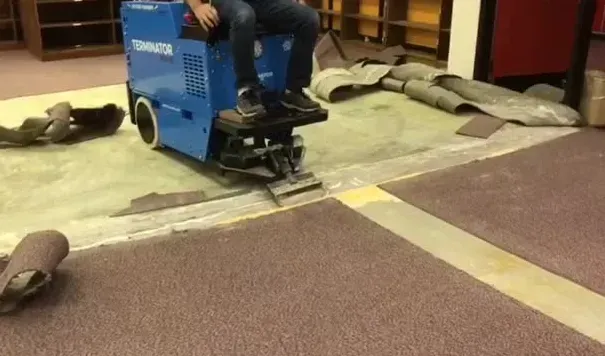
The benefits of using a ride-on floor scraper to remove various flooring materials are centered on efficiency, power, and comfort, especially for large-scale demolition projects. These powerful machines are designed to remove a wide range of flooring types, including carpet, tile, hardwood, vinyl, and epoxy coatings, significantly reducing the time and labor required for floor preparation. Their substantial weight provides powerful scraping force, allowing for aggressive removal of difficult materials like thick adhesives and tile thinset with minimal manual effort. Operators can sit while working, which reduces physical strain and fatigue and allows for extended operation time, further boosting productivity on large commercial and industrial jobs. Furthermore, many models come with adjustable blade angles and variable speed control to optimize removal for different flooring types and conditions, ensuring a clean and effective removal process.
Walk Behind Floor Scraper
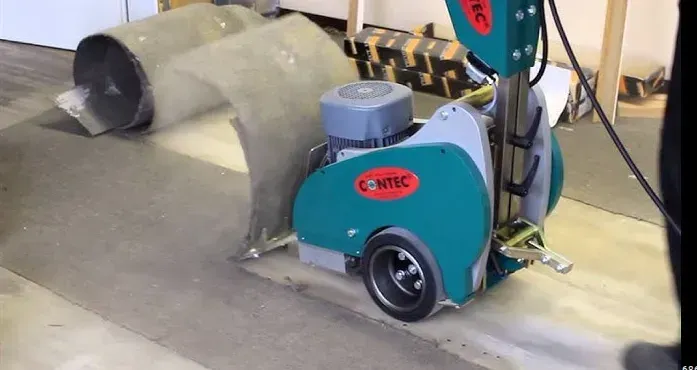
Walk-behind scrapers are better for smaller, confined spaces and offer greater maneuverability for materials like carpet and VCT, while ride-on scrapers are ideal for large, open areas due to their superior power and speed, which drastically increases productivity for materials like tile and thinset. Walk-behinds are more cost-effective for smaller jobs and can access tight areas a ride-on cannot, while ride-ons significantly reduce labor time and fatigue on extensive projects, making them better for large commercial jobs.
Jackhammers and Demohammers
Using jackhammers or demolition hammers offers significant advantages for removing various flooring materials by leveraging powerful, mechanized force to achieve superior speed, efficiency, and effectiveness compared to manual methods. With specialized chisel attachments, these tools can quickly break apart ceramic tile, concrete, and thick mortar beds without causing unnecessary damage to the underlying concrete slab. For removing other materials, such as wood, vinyl, or heavy adhesive residue, a floor scraping attachment can strip large sections at a time, dramatically reducing the labor and time required for the job. The ability to deliver powerful, consistent impact makes these hammers ideal for handling tough demolition, leading to faster project completion and less physical strain on the operator.
Dump Trailers
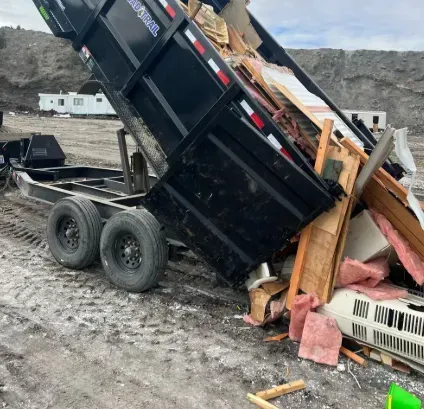
Instead of manually moving heavy materials like concrete, tile, wood, or carpet padding, the dump trailer functions as a mobile, high-capacity dumpster. A crew can toss all types of debris directly into the trailer, then a hydraulic lift system allows for quick and effortless disposal at the dump site with the push of a button. This process not only saves significant time and physical strain but also reduces the risk of injuries associated with repeated heavy lifting.
Specialized Tools We Use to Get the Job Done
HAPPY CUSTOMERS!
What our customers say
Find us
INQUIRE
Contact Us
We will get back to you as soon as possible.
Please try again later.